When someone is angry, they’re in pain.
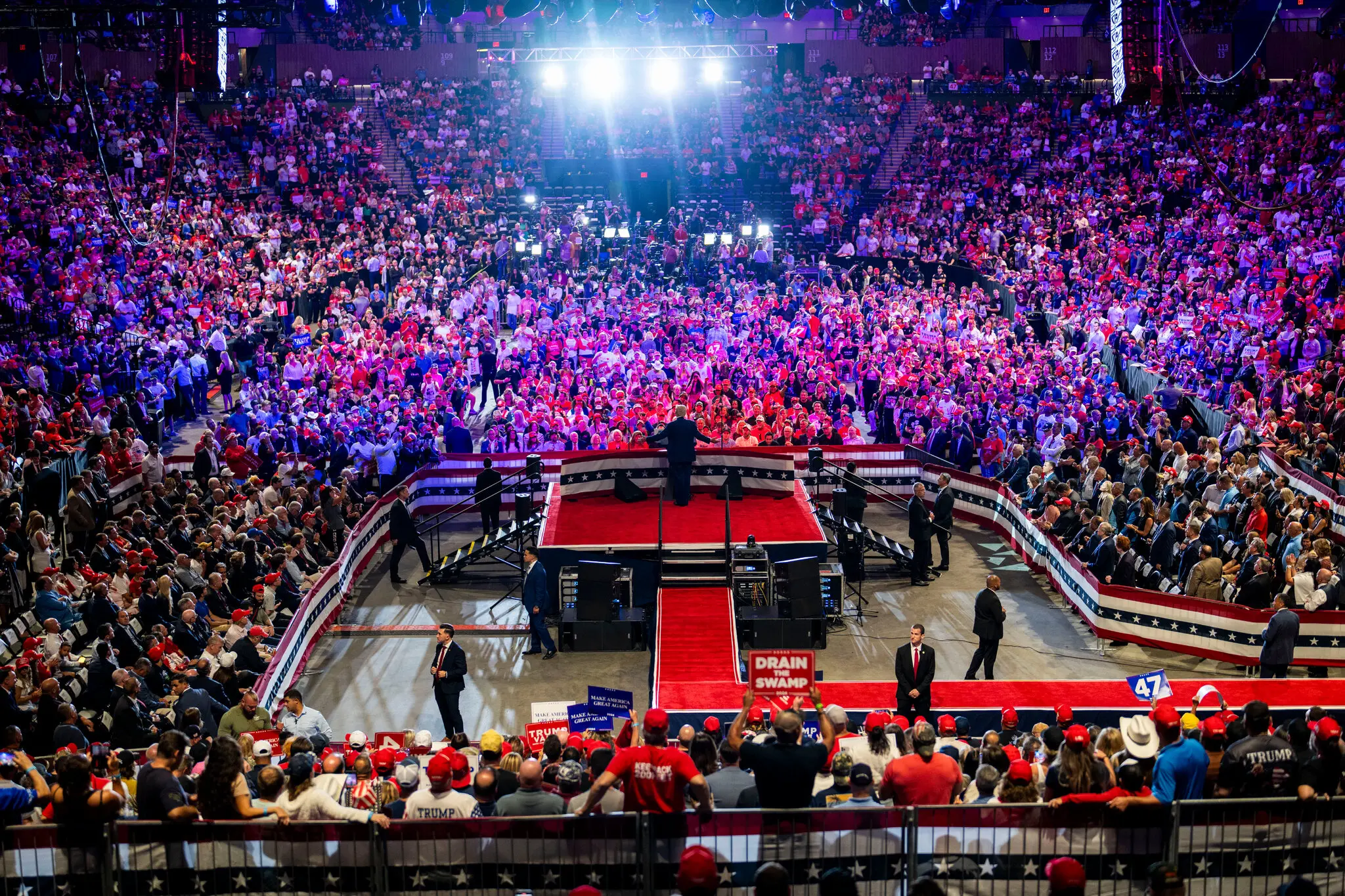
Like 2016, people will study this moment. Eight years ago, Donald had some policy positions, but his digital campaigns used a then-unprecedented level of selective messaging. It didn’t matter if the sum of his message was contradictory, the parts reached people they would appeal to. In 2024, his public appearances ranged from folksy, pro-worker, superficial, long, and musical, to explicit, insulting, anti-union, racist, untrue, critical of his own staff, exhausted, and most importantly, anti-democratic. His speech always built in plausible deniability, but this is undeniable. If you paid attention, you’ve seen the above behavior. This year he bet on chaos, rather than any particular “concepts of plans”. He’s been enabled by people angry and afraid of not belonging to their country. His lawsuits have been spun as a corrupt system in the way, allowing a white, male, billionaire past president to keep calling himself an outsider.
This moment tells me America has weakened. Our traditional, digital, social, and alternative media environment allowed someone to use incoherence as a strength, not a weakness. His campaign directed the values of freedom and prosperity toward nostalgia, nativism, and Reagan-era capitalism. I’m worried Donald’s supporters are about to enter an abusive relationship, and if you’ve ever warned someone approaching (or inside) one, you remember how little they heard. I’m not interested in convincing people he is anti-democratic. If they don’t see it, I’m not sure they ever will.
During The New York Times’ election commentary last night, Lydia Polgreen wrote, “I have spent my career covering places with really existential problems like hunger, extreme poverty, uncontrolled disease, civil war. I think Americans are suffering from problems that are primarily psychological rather than material. That does not make them less real. If anything, it makes them even more powerful and more resistant to material solutions.”
Republican politicians cynically use Donald to consolidate power. Mitt Romney reported closed-door conversations where colleagues insulted the 45th president while publicly showing approval. “Almost without exception,” he said, “they shared my view of the president.” A senior Republican admitted, “He has none of the qualities you would want in a president, and all of the qualities you wouldn’t.” But any Conservative critical of Donald has been ostracized, so the party became a two-faced cult, engaging in further lies, fear-mongering, and isolationist policy that will cost the US economically and socially. It would be one thing if the incoming Congress actually believed in Donald, but it’s immoral if they pretend to.
Maybe the Founding Fathers didn’t anticipate the degree to which capitalism would create a media environment that surfaces lies and controversy more than good-faith policy comparison. Donald is the result of this environment. If we incentivize negative messaging, accelerated by algorithms, people lose capacity to solve collective action problems. The democratic process should give voice to the people, but can people work together if they don’t agree on reality?
A lot will happen between now and 2026, when some are already hoping to flip Congress. Some hope Donald’s legal troubles will eventually be consequential. But if the turnout is any measure, anti-Donald rulings will be unpopular and appeals will be carried by his cronies in the Supreme Court. Our checks and balances could fail. Legally.
For a while I believed in the American dream. The immigrant dream. But as I grew up, I started to see it as the colonists’ dream. Maybe this is the outcome of the American Experiment, which included a free market, and somewhere around the Citizens United ruling our political process turned into partisan “good vs. evil” mega-campaigns, not the needs of the working class.
If we’re lucky, maybe we’ll break into a desperately needed multi-party system. Violence, alarm, and social media will not get us anywhere. Votes, some boycotts, and local organizing will. When someone is angry, they’re in pain.
I hope we can push back honestly and patiently.
Photo credit: Doug Mills/The New York Times